The complaint is always the same
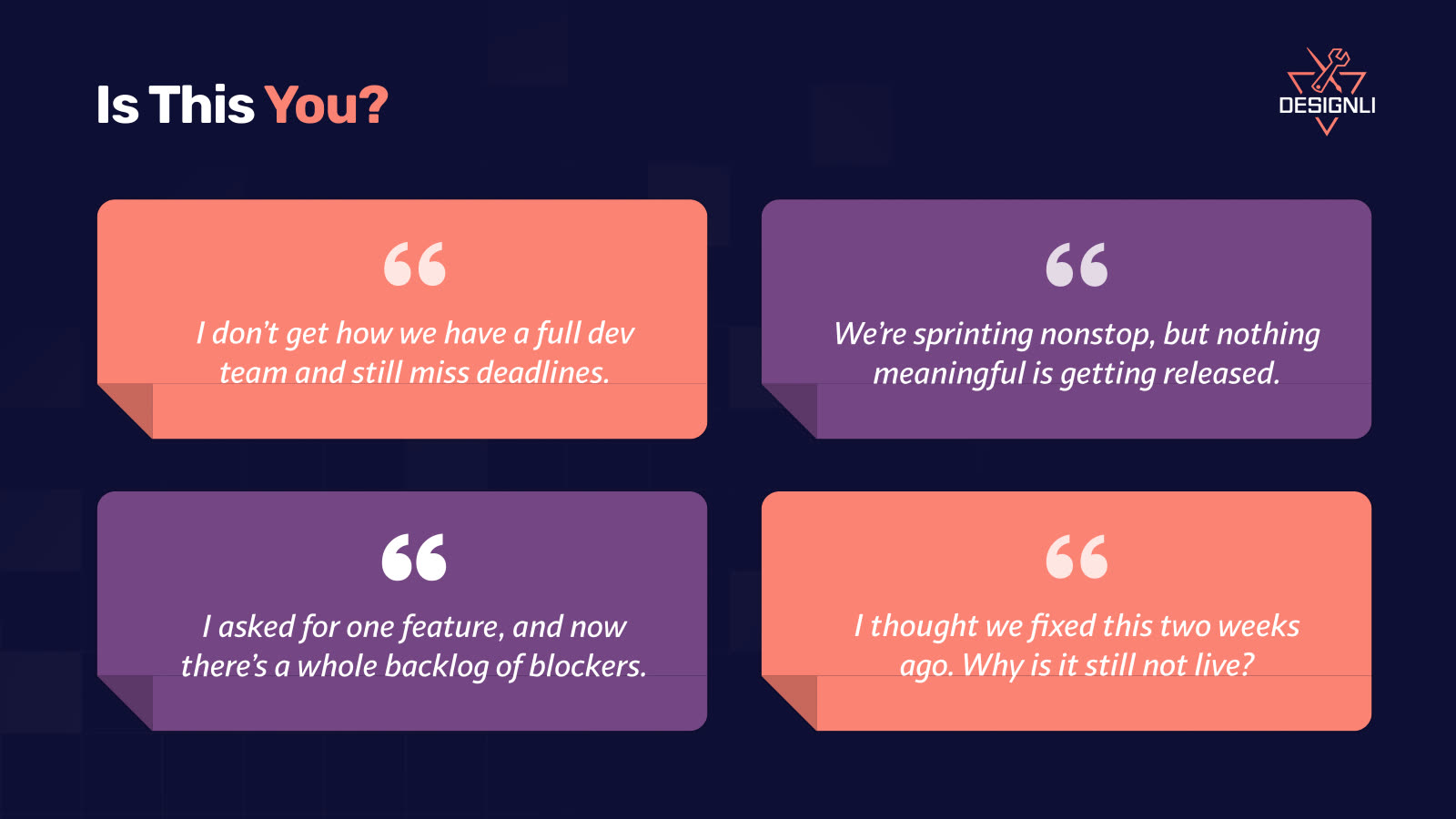
Four sentences come up in almost every conversation with a founder whose build is behind. I don't get how we have a full dev team and still miss deadlines. We're sprinting nonstop, but nothing meaningful is getting released. I asked for one feature, and now there's a whole backlog of blockers. I thought we fixed this two weeks ago, so why is it still not live?
None of those is a complaint about effort. They are four descriptions of the same thing: work is happening, and it is not turning into shipped software.
Your most valuable asset is time
Carlos's framing is that most founders do not know what their most valuable asset is, and it is time. A development team, its cost and its resources are all measured in time. Being deliberate about where that time goes is what clears the roadblocks between where a product is and where the founder wants it.
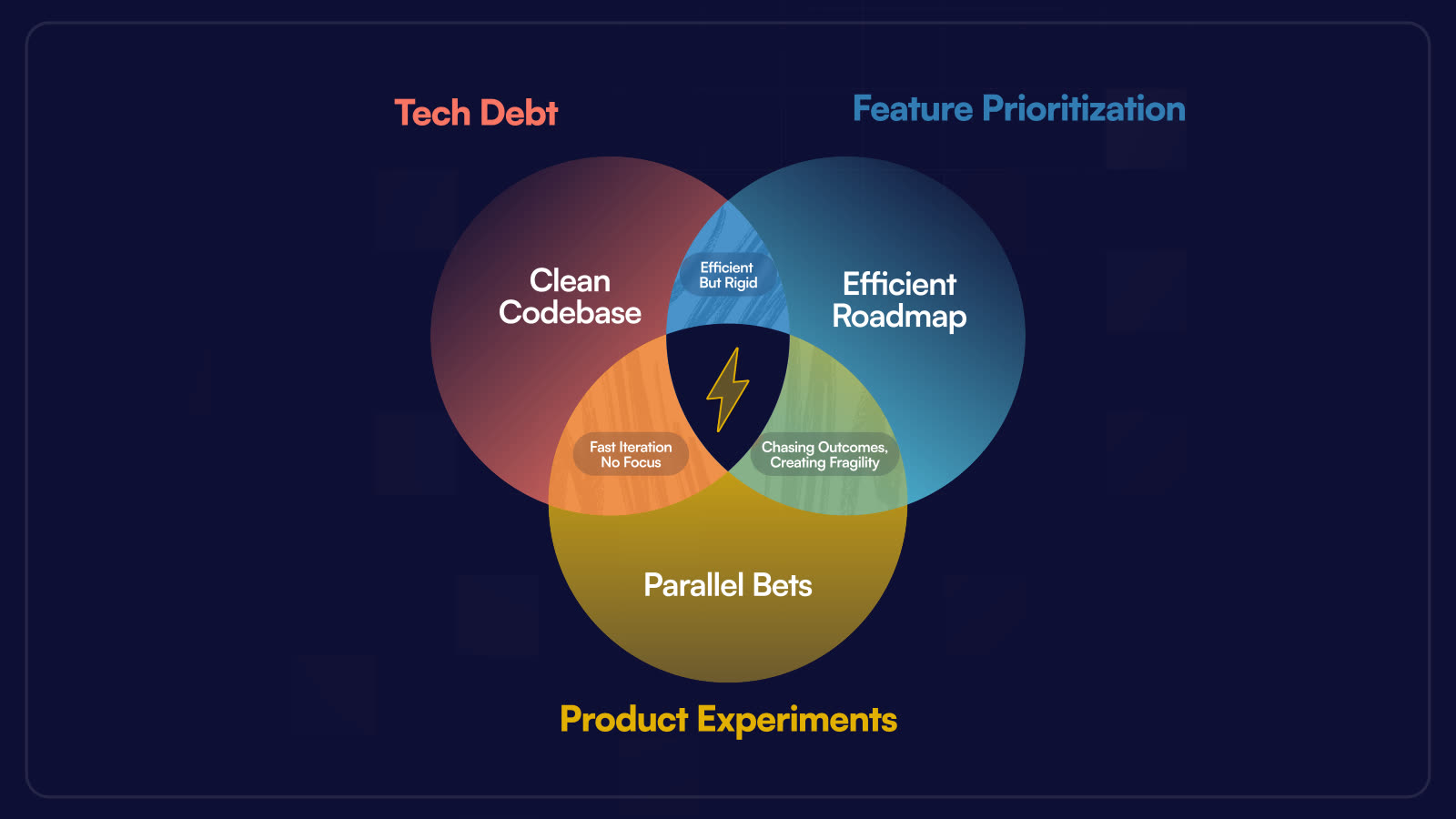
Across the companies Designli has worked with, that time goes in three places. A clean codebase. A roadmap that prioritises the right feedback. And side bets that do not starve the core product. Those are the three pillars, and the gaps between them are diagnostic. Clean code and a good roadmap but no side bets gives you a team that is efficient but rigid. Clean code and side bets without a roadmap gives you fast iteration with no focus. A roadmap and side bets on a fragile codebase means you are chasing outcomes and building fragility as you go.
Pillar one: technical debt
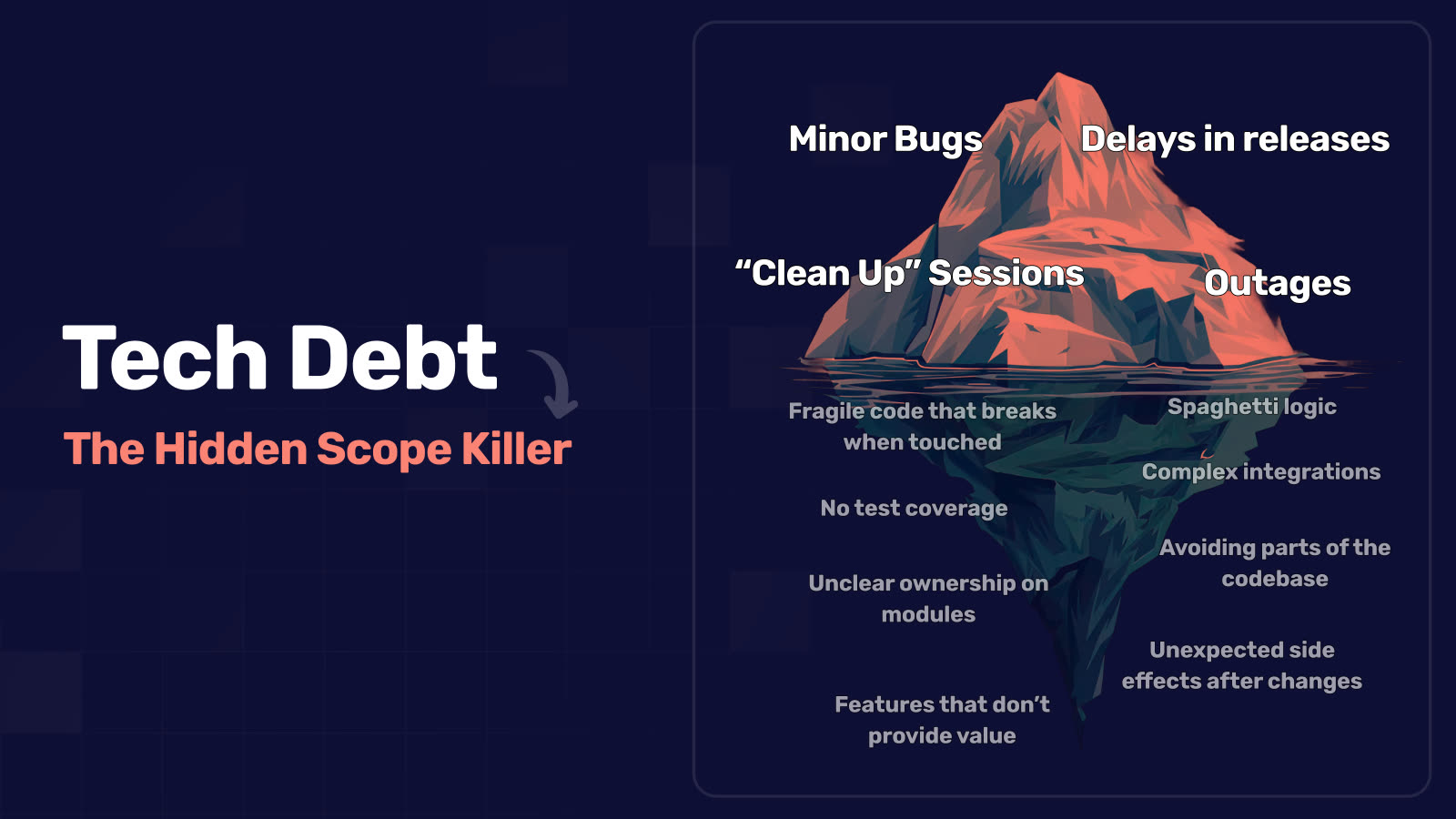
What a founder sees is the surface. Minor bugs. Delays in releases. Sprints that quietly become clean-up sessions. Outages.
Underneath sits the real problem. Fragile code that breaks when it is touched. Spaghetti logic, where front end and back end are so entangled that fixing one thing breaks another. No test coverage. Unclear ownership of modules.
Technical debt is the result of cutting corners to move quickly, usually early on: code written poorly, or on outdated technology, or by the wrong people. It compounds. A couple of sprints get dedicated to fixing things, then more, and a team that spends its time fixing what is already broken has no time left to ship.
Three ways to spot it
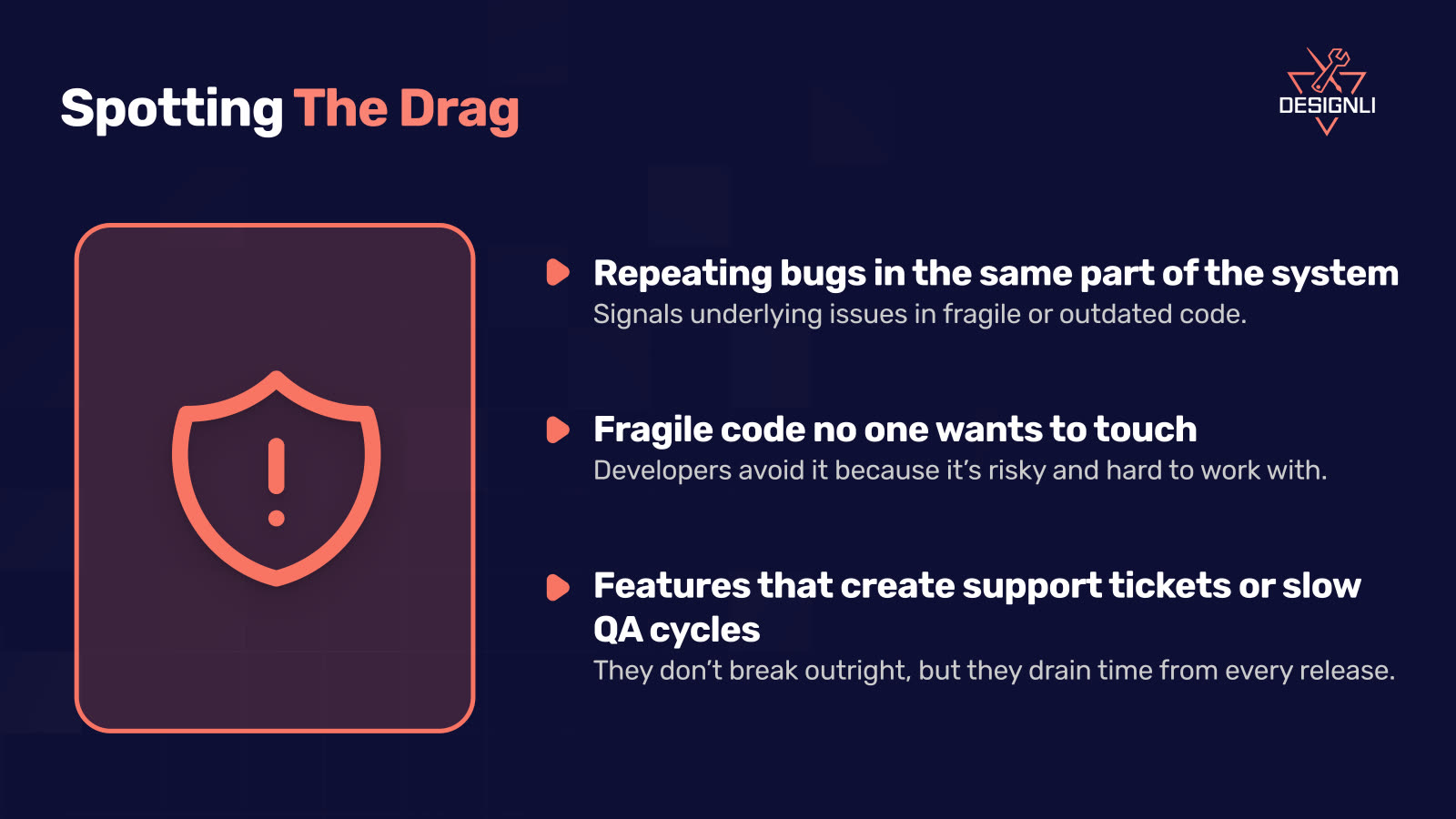
Repeating bugs. The same or similar bugs in the same part of the system, over and over.
Developers avoiding part of the codebase. If your team steers around a particular area at all costs, that is a red flag rather than a preference.
Features that keep generating support tickets or slow QA cycles.
Refactor, rebuild or kill
Once you have found it, there are three decisions and only three.
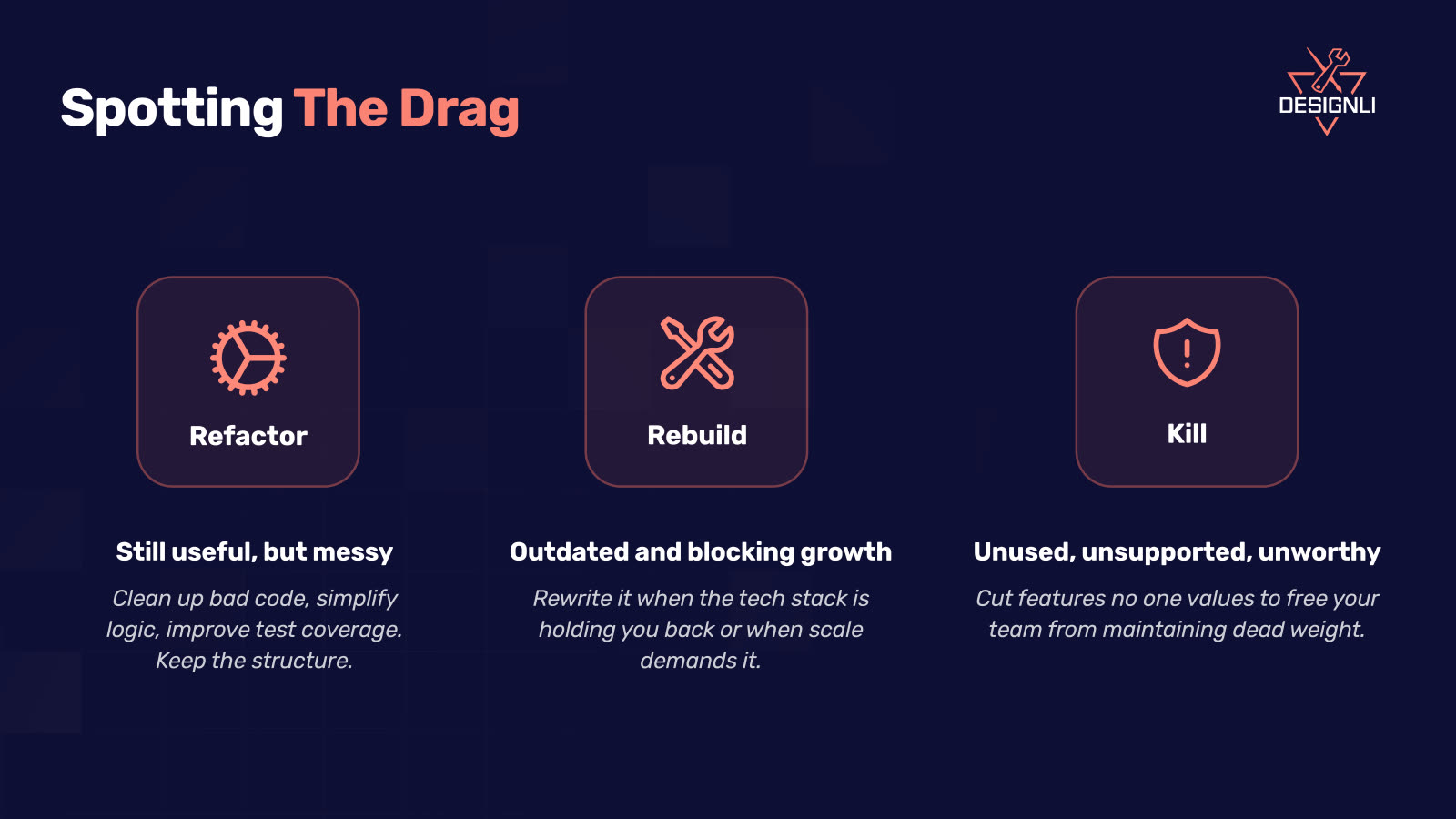
Refactor when the code is useful and up to date but structured badly. Go in and clean it up.
Rebuild when the tech stack itself is outdated, or the feature is generating repeated bugs. Refactoring buys you little if the technology underneath is no longer supported.
Kill when it is not providing value. If it is outdated and messy and nobody uses it, the cheapest decision is to stop maintaining it.
Carlos's test for the first two is a bookcase. If the books are not in order, you reorganise the shelf - that is a refactor. If the wood itself has rotted, you take the wood out and build it again. Same for code: wrong version or old technology means rebuild, disorganised but current means refactor.
Guardrails, so it does not come back
Sorting the debt once is not the fix. The fix is making it hard to add more, and Carlos names three non-negotiables.
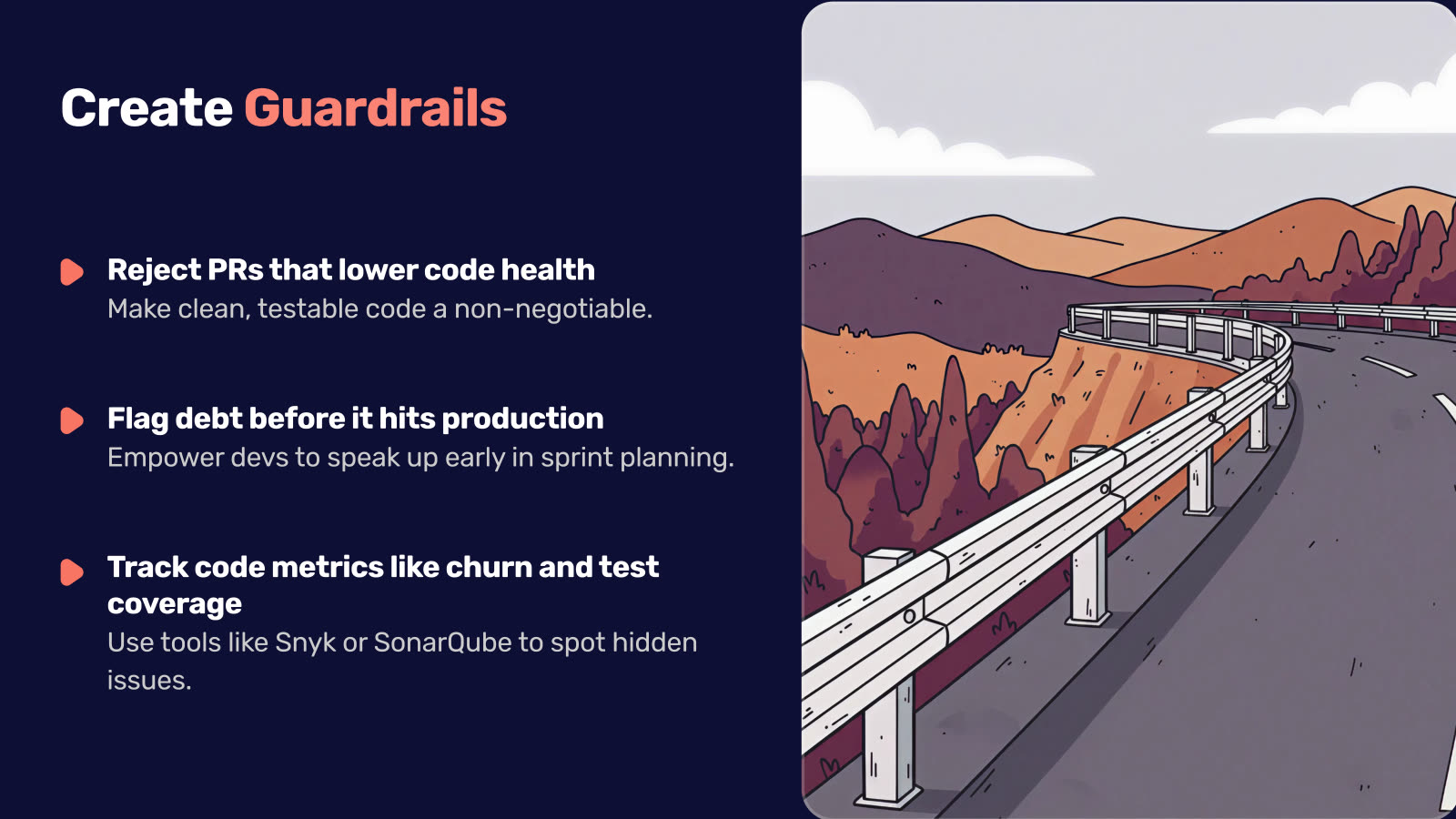
Clean, testable code, with written guidelines and SOPs for what that actually means, so it is not a matter of taste.
Flagging debt before it reaches production, which means empowering developers to raise it in sprint planning, a rigorous QA process, and a senior engineer who can judge whether what is shipping is good enough.
Tracking the codebase's health with tools like Snyk or SonarQube, because some debt gets through however careful you are, and you want a number on it rather than an opinion.
Five questions to ask your developers
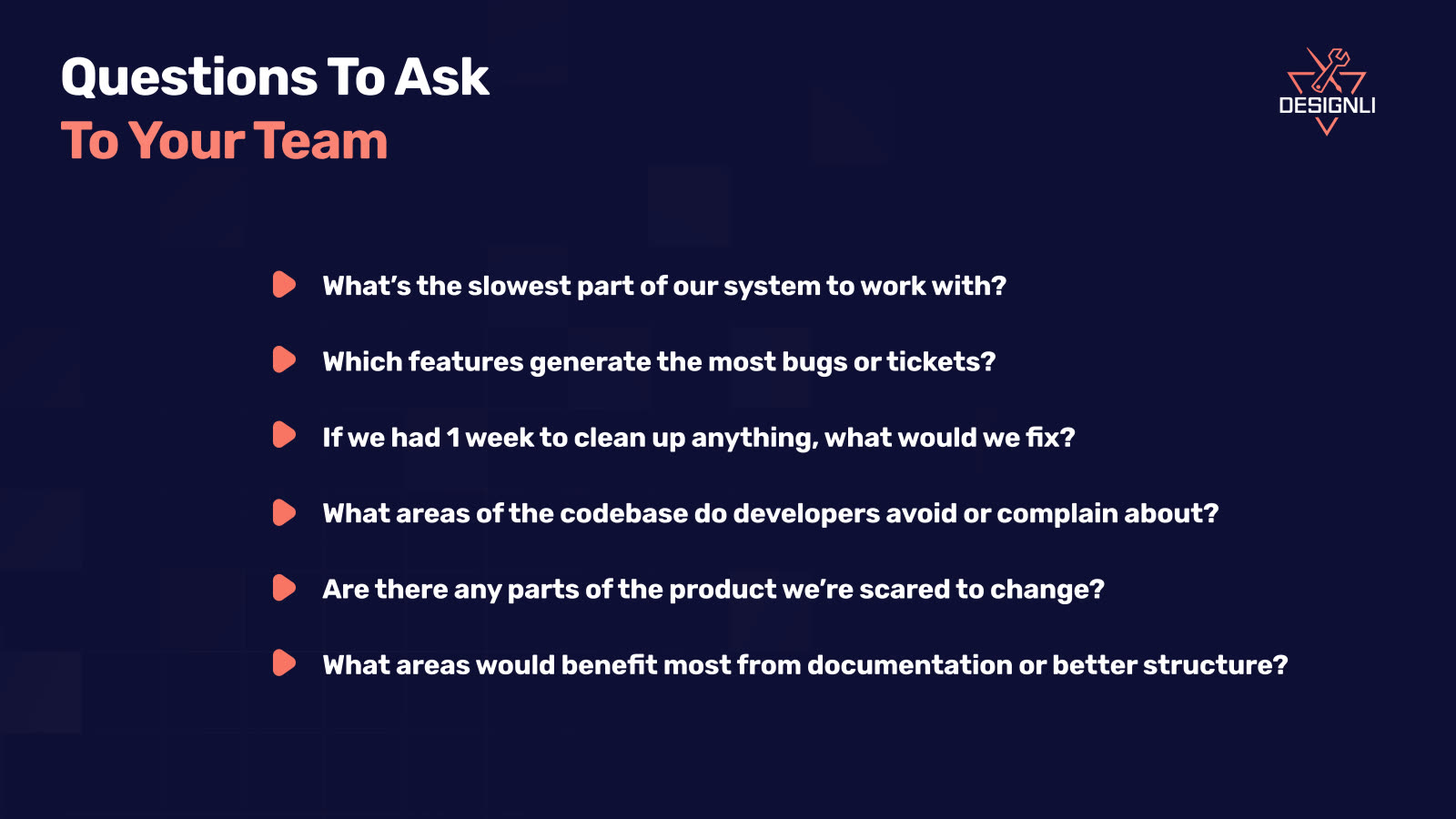
Carlos's suggestion for a non-technical founder is to turn around after the call and ask the team five plain-English questions.
What is the slowest part of our system to work with? Which features generate the most bugs or support tickets? If you had one week to clean up anything, what would you fix? What areas of the codebase do developers avoid or complain about? Are there parts of the product we are scared to change?
That last one usually surfaces something a senior developer built early on that everybody hired since has been afraid to touch.
His image for what happens if you leave it is quicksand. You get in, you keep walking, you get slower and slower, and then you are simply stuck.
Pillar two: prioritising feedback
The second pillar is teaching a team to cut through the noise and focus on the signal. Carlos frames it through something his father told him: the hardest thing to learn is to say no. Anyone can say yes. Saying no is hard, especially when the request is frequent or persuasive.
Some users ask for features that do not move the needle or do not fit the long-term strategy, and a team that says yes to all of it is busy rather than productive.
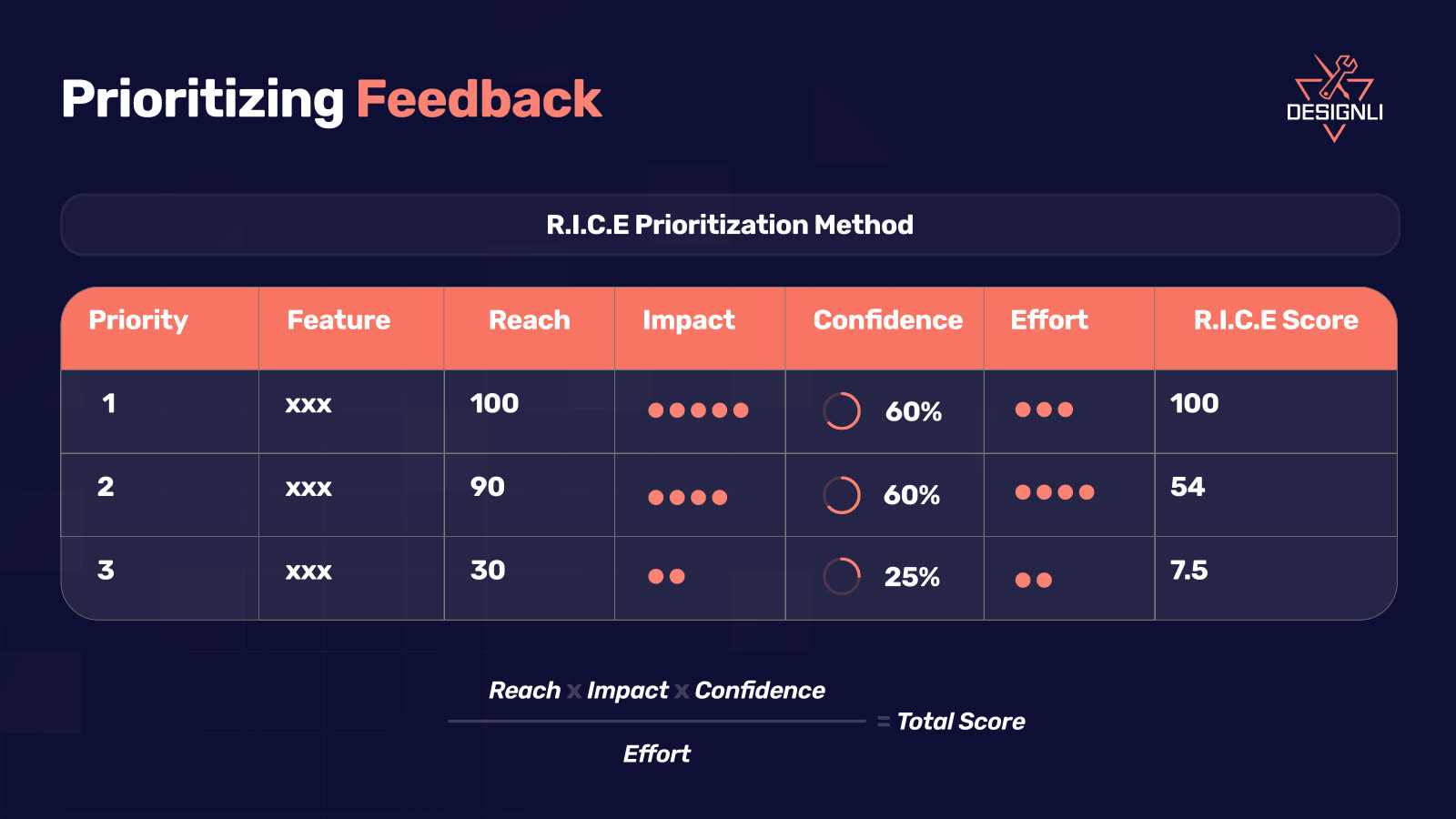
Two frameworks do the sorting. R.I.C.E., from the team at Intercom, scores reach times impact times confidence, divided by effort - users per month, a subjective one-to-five impact score, a confidence percentage that accounts for how uncertain the first two are, and development hours. Higher score goes first.
The Eisenhower matrix plots impact against effort. High impact and low effort are quick wins, and you take them. High effort and low impact is, in Carlos's words, where your money goes to die. Low impact and low effort are filler - the television episode where nothing happens - and they keep a team busy without moving anything. Most real work lands in high impact and high effort, which is where planning earns its keep. The practical move is to plot everything on the matrix first, then use R.I.C.E. to rank within a quadrant.
Pillar three: parallel bets
The third pillar is for teams running something alongside the core product - Uber and Uber Eats is the example. A side bet that is managed like core operations will quietly eat them.
Treat it as a tiny MVP instead. It gets its own criteria and its own metrics, because the ones you use for the core product do not apply. Budget the time, the talent and the money before anyone builds. And remember that the core product started as a hypothesis you validated, so the side bet has no guarantee of panning out the same way.
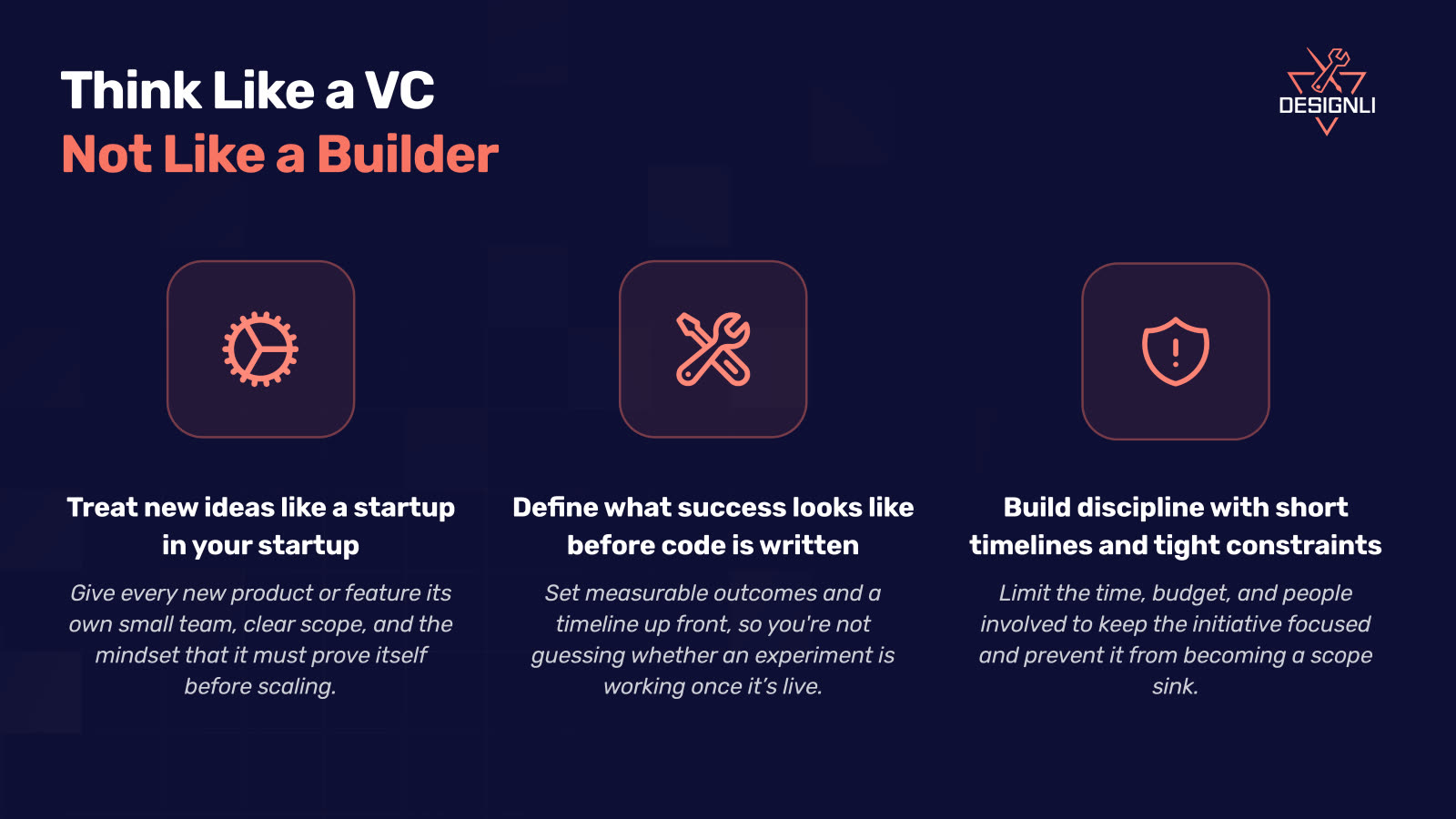
Carlos's summary is to stop thinking like a builder and start thinking like a VC. Treat a new idea as a startup inside your startup: a small team with clear scope and resources, a definition of success written before the code is, and real timelines and constraints so it cannot drift into the core team's capacity.
That also means defining the kill switch up front - the conditions under which you stop. Stopping a bad idea is a win, and an MVP process is something you pay to learn from rather than to earn from straight away.